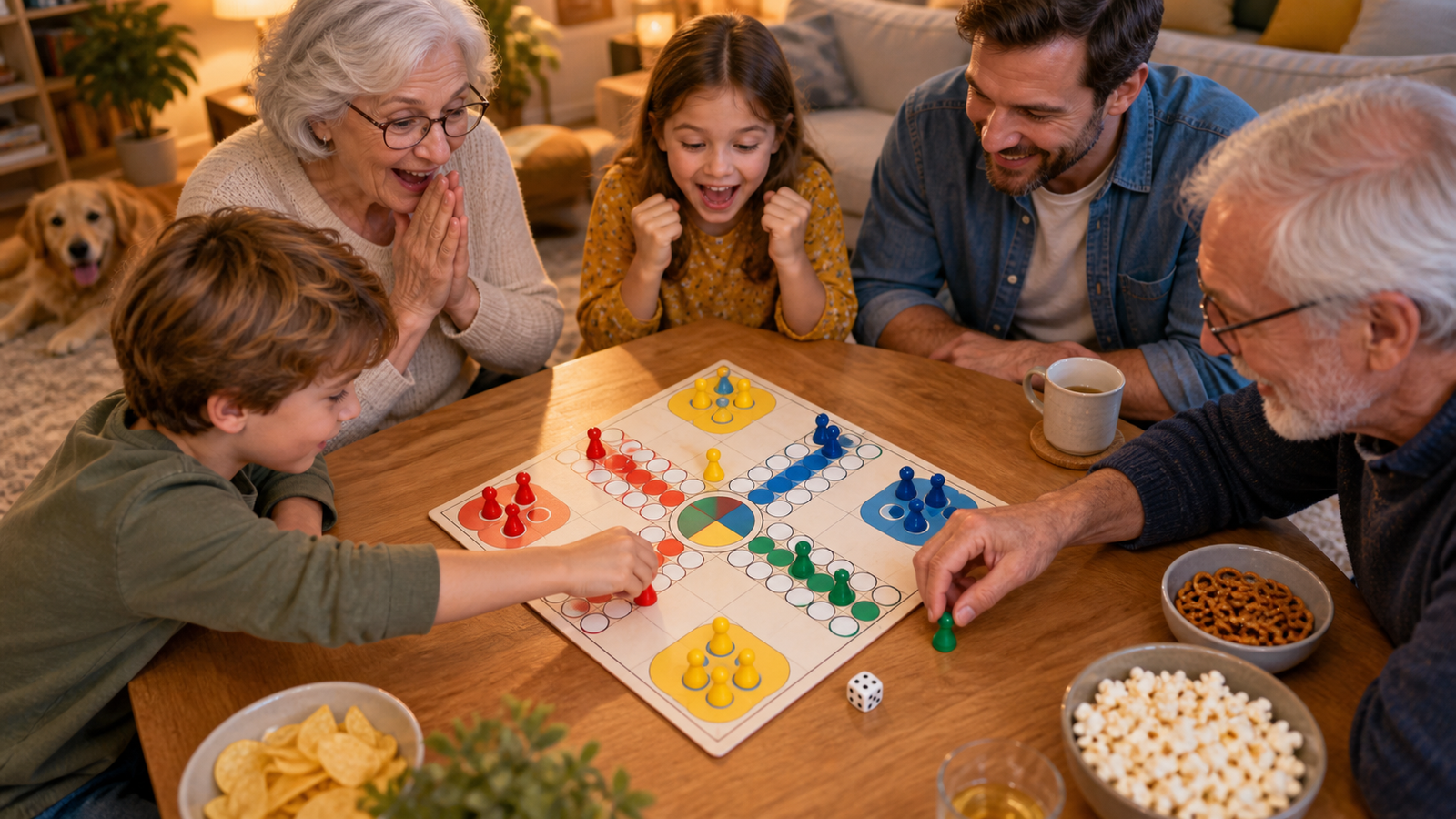
A pawn is only a few spaces from home when an opponent draws the perfect card, lands on it, and sends it all the way back to the start. That sudden reversal captures the emotional core of classic race games: progress feels tangible, luck keeps the result uncertain, and direct interaction turns a simple route into a lively family contest. The rules are approachable, but strong decisions still improve the odds.
Games commonly known by the “Sorry!” style of movement have different editions and house rules, so the printed rules for the set on the table are always authoritative. In general, players move several pawns from a starting area around a track toward a protected home, using cards rather than dice. Some cards start a pawn, some move forward or backward, some split movement, and some exchange positions or trigger a bump. The following strategy focuses on principles that apply across many editions.
Know the real objective
The visible goal is to move every pawn home, but the practical challenge is managing a small team of pieces under uncertain card draws. A player who advances only one pawn quickly may look ahead and still be vulnerable. A player with several active pawns has more legal choices and more opportunities to use unusual cards efficiently.
Think in terms of total position, not the location of the leading pawn. How many pieces are available to move? Which pieces can enter a safety zone? Which opponents are close enough to threaten them? Which future cards would be wasted? A balanced position often creates more value than a single dramatic sprint.
Get additional pawns into play
Early in the game, activating a second or third pawn usually improves flexibility. If the only active pawn is blocked from a useful move or sits close to home, a long movement card may become awkward. Multiple pawns allow the player to match each card to a suitable distance.
There is still a tradeoff. A pawn leaving start may occupy a dangerous part of the track, and some cards offer an attractive attack instead. Compare immediate gain with future options. When the board is open and opponents are distant, development is often best. When an opponent is about to enter home, direct interference may deserve priority.
Use backward movement as a tool
Beginners naturally treat backward cards as penalties. In a circular race, however, a short backward move from the starting area can sometimes place a pawn close to its entry into the final stretch on a later turn. Even when that shortcut is not available, moving backward may leave a safer distance between pawns or set up an exchange.
Judge a move by the opportunities it creates, not by whether the number has a minus sign. Count the distance to useful slides, opponent pawns, protected zones, and home. A backward move that makes the next three card types productive can be stronger than a forward move that leaves only one exact number useful.
Families looking for game resources may also encounter betting promotions online. If an eligible adult visits a third-party destination such as Betonklik, it is important to check whether the service is legal and licensed locally, understand its rules, and separate wagering from ordinary family play.
Measure risk before making a capture
Sending an opponent back to start is satisfying and may be strategically valuable, especially when that pawn is close to home. But a capture can place the attacking pawn on an exposed square. Before making the move, check which opponents act before your next turn and which card values could reach you.
Target selection should follow position. A leading pawn near safety is normally more urgent than a piece that has just entered the board. Avoid attacking a player solely because of a previous bump; revenge can help the actual leader. A good move changes the race, protects your options, or both.
Treat exchanges as tactical resources
A position-switching card is more than an attack. It can rescue a pawn from the back, place it near the final path, break an opponent’s strong position, or avoid wasting movement. The best exchange often produces two advantages at once: your pawn advances and an opponent’s pawn retreats.
Do not automatically trade with the farthest opponent. Consider safety after the swap. If the destination is surrounded by threats, the apparent leap may not last. Also consider which of your pawns you give away. Moving a poorly placed pawn is preferable to sacrificing one already positioned for an exact entry into home.
Use split moves carefully
Cards that divide a total between two pawns can be among the most powerful because they solve precise positioning problems. A split may send one pawn home while moving another onto a slide, away from danger, or into capture range. It may also activate two useful plans in one turn.
Count both parts before touching a piece. Some rules require the full value to be used legally, and a tempting first move may leave no valid second portion. Announce the split clearly so everyone can verify the count. This habit prevents disputes and reduces accidental take-backs.
Protect the entrance to home
The final stretch usually changes priorities. A pawn in a protected lane cannot be attacked in the same way as one on the shared track, but reaching the exact home space may require precise values. Keep another pawn active so unwanted cards still have a destination. When possible, avoid arranging pieces so they block one another’s legal progress.
Count exact distances. Players often waste time by repeatedly recounting a near-home pawn under pressure. Knowing which values finish the trip makes split and backward options easier to assess. It also reveals when another pawn should become the primary focus.
Adapt strategy to turn order
A square that looks safe may be threatened by several players before the pawn moves again. Identify the next player, then scan outward for possible card distances. In a three- or four-player game, exposure increases because more cards will be drawn before the turn returns.
Turn order also affects whom to slow. If the leader acts immediately after you, a defensive move may be urgent. If two other players can interact first, advancing your own position could be better. Strategy is less about predicting one exact card than recognizing ranges of likely consequences.
Card-driven games are entertainment, and wagering should be approached even more cautiously. An adult who follows a bet link should set strict time and spending limits, never borrow or chase a loss, and stop when the activity is no longer comfortable or fun.
Keep family competition healthy
Direct attacks can feel personal to younger players. Explain before the game that bumping is a normal mechanism, not a statement about the person. Model a calm response when your own pawn returns to start. Praise careful counting and clever choices, not only victory.
For very young beginners, play open-handed practice rounds, reduce the number of pawns, or form adult-child teams. Avoid inventing relief rules midway through a match, because unpredictable exceptions can feel less fair than the original setback. Agree on any adaptation at the beginning.
Luck will always shape the result, and that is part of the appeal. Strategy cannot guarantee the needed card, but it can create more useful destinations, reduce exposure, and recognize when interaction matters. Develop multiple pawns, rethink backward movement, evaluate captures by position, and count the final path carefully. The result is a race game that remains easy to teach while offering enough judgment, surprise, and good-natured drama for repeated family nights.